Heavy rain has a way of revealing things.
Across office parks, retail centers, medical buildings and multi-unit residential properties, first-floor glass often looks streaked, dull or uneven after a storm cycle. The common instinct is to wait for clear weather and let everything dry out.
But rain is not neutral. And spring does not pause exposure. In fact, this seasonal transition is when exterior glass begins to decline faster, not slower.
What Rain Actually Does to Commercial Glass
Rainwater is not distilled. As it travels across roofing, stucco, metal flashing and façade surfaces, it collects:
- Sediment
- Organic debris
- Atmospheric pollutants
- Residual minerals
When that runoff reaches first-floor elevations, storefront lines and entry glass, it deposits contaminants that dry in place. Even when glass appears “rinsed,” microscopic residue remains. On its own, this is manageable.
But rain season rarely acts alone.
What Happens When Irrigation Systems Turn Back On
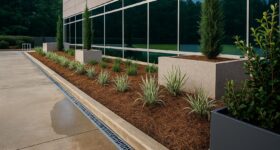
As properties move toward spring, landscape irrigation returns to regular schedules. This is where acceleration begins.
Irrigation overspray introduces hard minerals directly onto already compromised glass. Repeated wet and dry cycles bond those minerals more aggressively to the surface.
What was a removable deposit in March can become light etching by early summer. For first-floor glass, especially in high-traffic commercial environments, this progression happens quickly.
Why This Matters Before Spring Tours and Leasing Activity
Spring often brings:
- Broker tours
- Tenant renewals
- Investor walkthroughs
- HOA board reviews
- Increased retail traffic
Glass clarity influences more than aesthetics. It affects:
- Interior brightness
- Perceived property care
- Tenant satisfaction
- First impressions at the entry point
When exterior glass appears neglected, even if systems inside are functioning perfectly, the property feels behind. In competitive leasing environments like Irvine and El Segundo, that perception matters.
The Compounding Effect of Deferred Attention
Rain damage and irrigation overspray are not dramatic events. They compound quietly.
Each cycle leaves minor deposits. Then, each deposit increases bonding. Then, each month without attention reduces clarity and raises restoration difficulty.
By late spring, managers are often reacting instead of planning. The cost difference between routine maintenance and mineral restoration can be significant.
A Proactive Approach for Spring
This is not about cleaning more aggressively. It is about aligning maintenance with exposure patterns. For many commercial properties, that means:
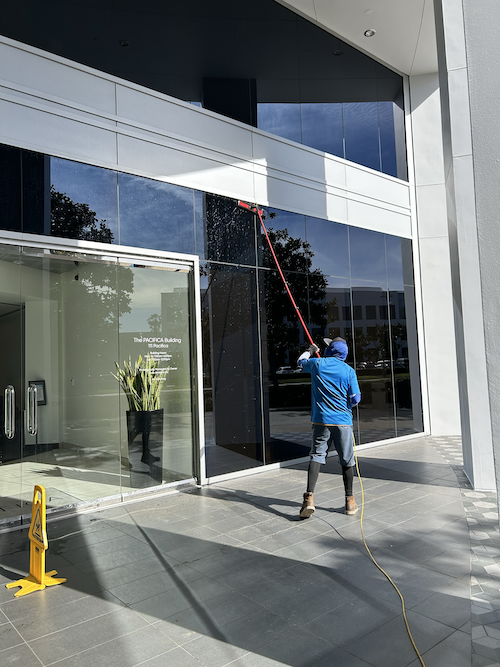
- Assessing first-floor elevations after rain cycles
- Resetting glass before irrigation season peaks
- Establishing a cadence that matches traffic and overspray exposure
- Using methods that minimize residual spotting and mineral bonding
When maintenance timing matches seasonal reality, properties experience:
- Longer clarity between services
- Fewer tenant complaints
- More predictable vendor scheduling
- Reduced restoration needs later in the year
The Bottom Line
Rain exposes. Irrigation accelerates. Spring increases visibility.
For office, retail and multi-unit properties, the transition from winter storms to irrigation season is one of the most important opportunities for protecting first-floor glass and avoiding downstream maintenance expenses.
Timely action prevents minor mineral buildup from becoming an expensive issue later.